AI is often discussed as a race for better models, bigger context windows, faster generation, lower latency. All of that matters. But the next meaningful leap is not happening only at the model layer. It is happening at the architectural layer in how intelligence is organized, routed, retained, and compounded across systems.
That belief has shaped everything I build and how I work. What follows is not a conventional developer setup or a list of favorite apps. It is the visible footprint of an operating philosophy: intelligence becomes significantly more powerful when it is embedded inside the right environment, one that can evolve, distribute work, preserve continuity, and compound leverage over time.
Some of that system is public. Some is proprietary. Some is still translating from highly personal tooling into forms that can become products or shared methods. This article is both an inventory and a statement of direction.
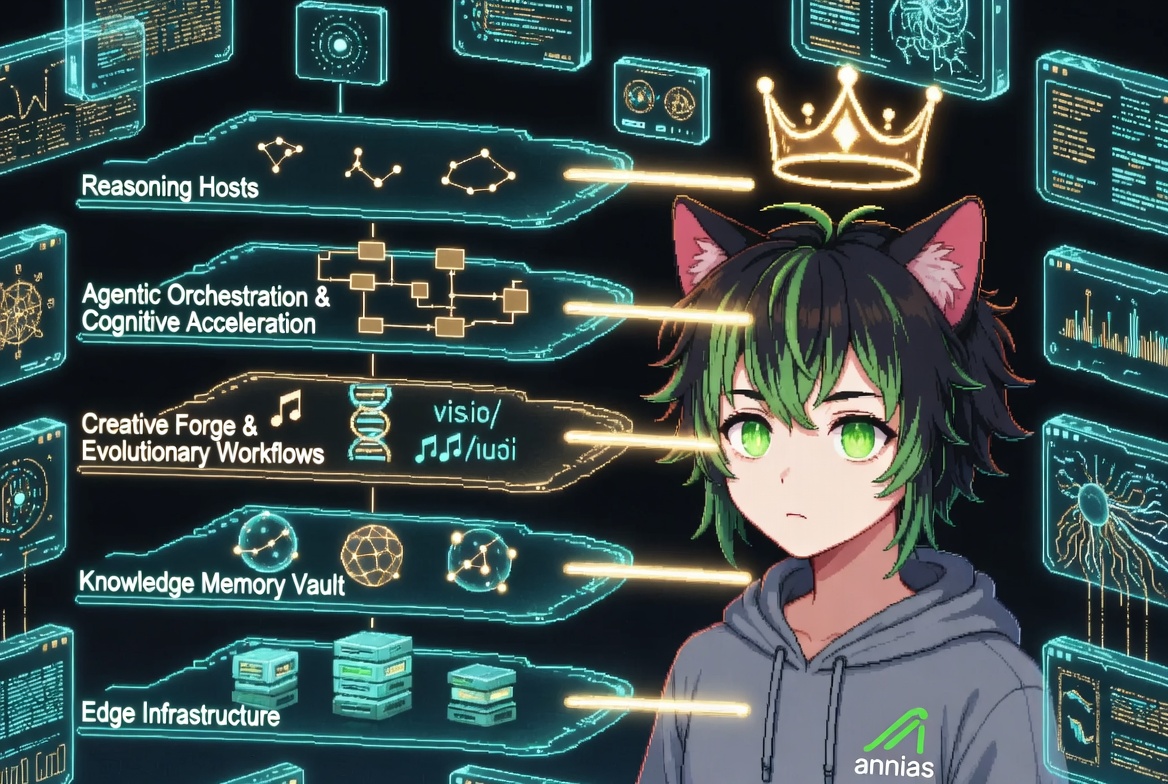
The shape of the system matters more than any single node.
Reasoning Hosts & Persistent Personas
These surfaces handle ideation, synthesis, research, and reusable cognitive characters. The mix of cloud inference, agentic systems, and local runtimes lets reasoning compound across contexts rather than resetting with every new chat.
- ChatGPT + MyGPTs, Primary reasoning and project-thread environment (planning, synthesis, voice, web-assisted work).
- Gemini + Gems, Strong grounding and multimodal reasoning; excellent for research and structured synthesis.
- Grok + Projects, Real-time, web-connected ideation and live integration.
- Claude, Long-form writing, design review, and deep structured analysis.
- Perplexity + Comet, Live research and answer synthesis with strong retrieval.
Supporting cast: DeepSeek, Kimi, GLM/Zhipu, SimTheory for specific lanes and overflow.
Persistent personas (MyGPTs, Gems, Grok Projects, internal Spawn Souls) turn one-off conversations into repeatable operating characters.
Agentic Execution, Orchestration & Cognitive Acceleration
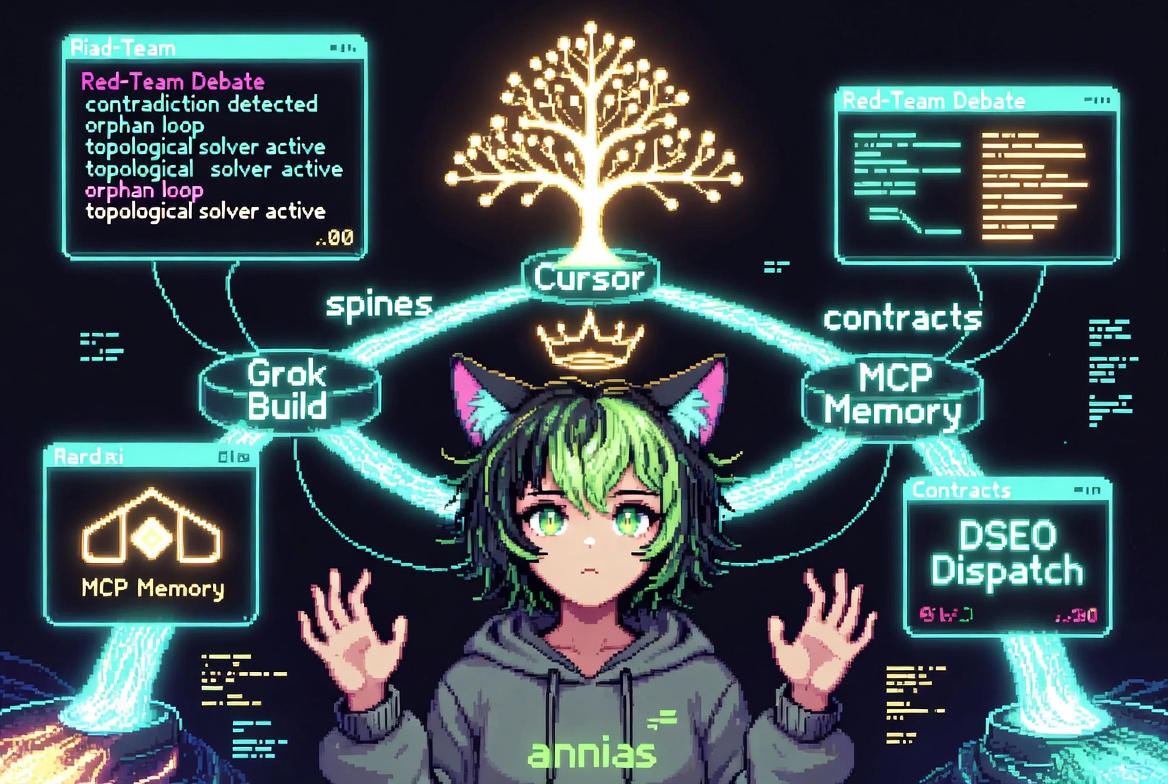
This is where ideas become executable workflows and complex thinking accelerates. The stack distributes cognition across specialized surfaces so the system can run parallel lenses, structured debates, and topological resolution instead of forcing everything through a single thread.
- Cursor, Primary agentic IDE for coding, repo navigation, subagent workflows, and MCP-connected development.
- Grok Build, Paired agentic build lane.
- Custom orchestration layers (Agent Daemon, DSEO Dispatch, MCP surfaces for codebase memory, Notion, Linear, Vercel, Canva, Gamma, Windows), Create the connective tissue that lets agents hand off, remember, and coordinate.
- VS Code / VSCodium / PyCharm, Lightweight and legacy fallbacks.
The combination of multi-host reasoning + agentic IDEs + memory layers is what enables genuine agentic cognitive acceleration (graph cognition, red-team diagnostics, debate panels, topological solving). Different tools become different cognitive lenses. The architecture turns isolated model calls into compounded, debate-capable intelligence.
Custom-Built Creative Platforms & Evolutionary Workflows
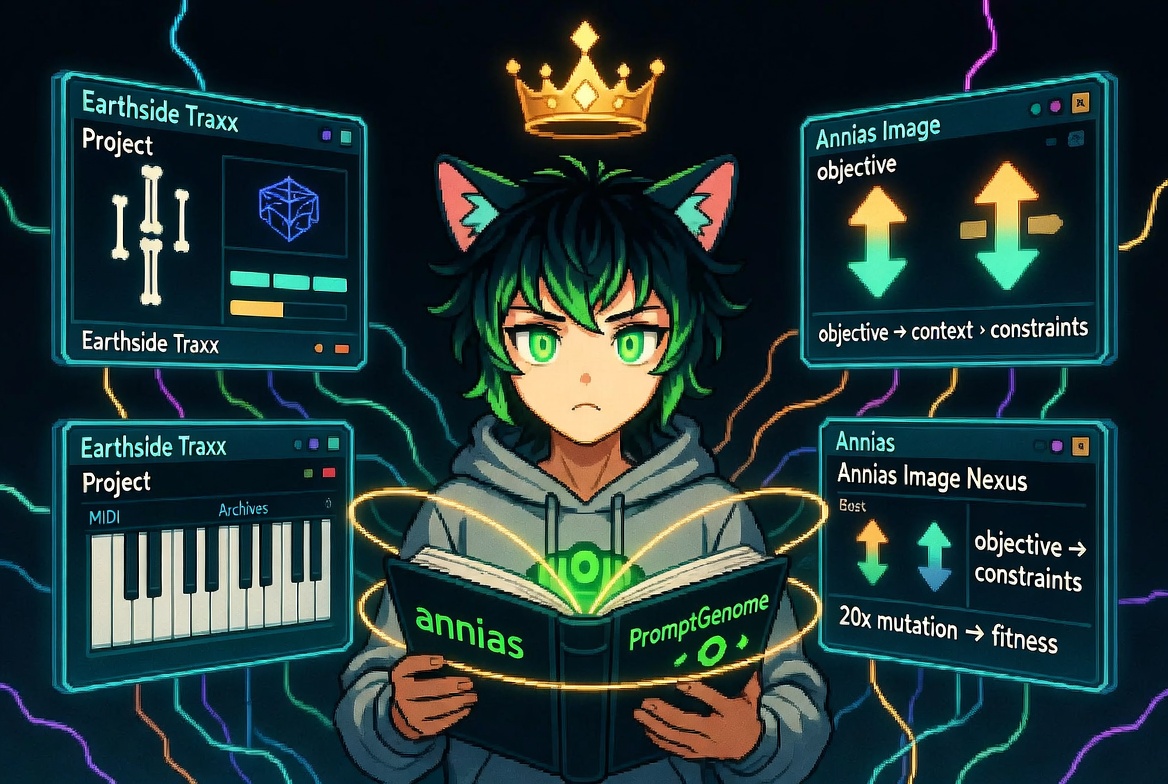
This category is philosophically central. These are systems I built because the workflows I needed did not exist yet. They are evolved continuously using PromptGenome mechanics (objective/context/constraints decomposition, 20× mutation cycles, fitness scoring, and future-state backcasting) so they improve structurally rather than just accumulating features.
- Earthside Traxx (evolved from Annias Music Nexus), Music booth and production interface. Recently completed first seven-day beta. Operates on a modular production substrate that emphasizes project continuity, asset intelligence, and cross-archive reuse rather than isolated generation. Early testing indicates meaningful advantages in workflow reactivity and output coherence compared with current prompt-to-audio platforms. Public version planned soon.
- Annias Image Nexus, Visual and prompt-construction system for image and concept development. Same modular evolutionary approach; SaaS form in active development.
- HLSL Forge, Electron-based shader lab (will release independently and integrate into larger 3D asset suite).
- KALIEDOS, Modular platform for VRChat/Udon/Blender/Unity-adjacent creation (part of larger VR OS vision).
- Atlas Forge, Texture atlas and business-lane tooling pilot (same trajectory).
Supporting: Earthside.tech (public site), FastAPI Ledger, Savi Wisp Monitor, Obsidian Bridge, FL Studio mods (project-bone extraction, cross-project asset reuse, automation/state management, packaging for broader use in progress).
These tools are not isolated apps. They are evolved organisms that compound creative leverage.
Knowledge, Memory & Source-of-Truth Systems
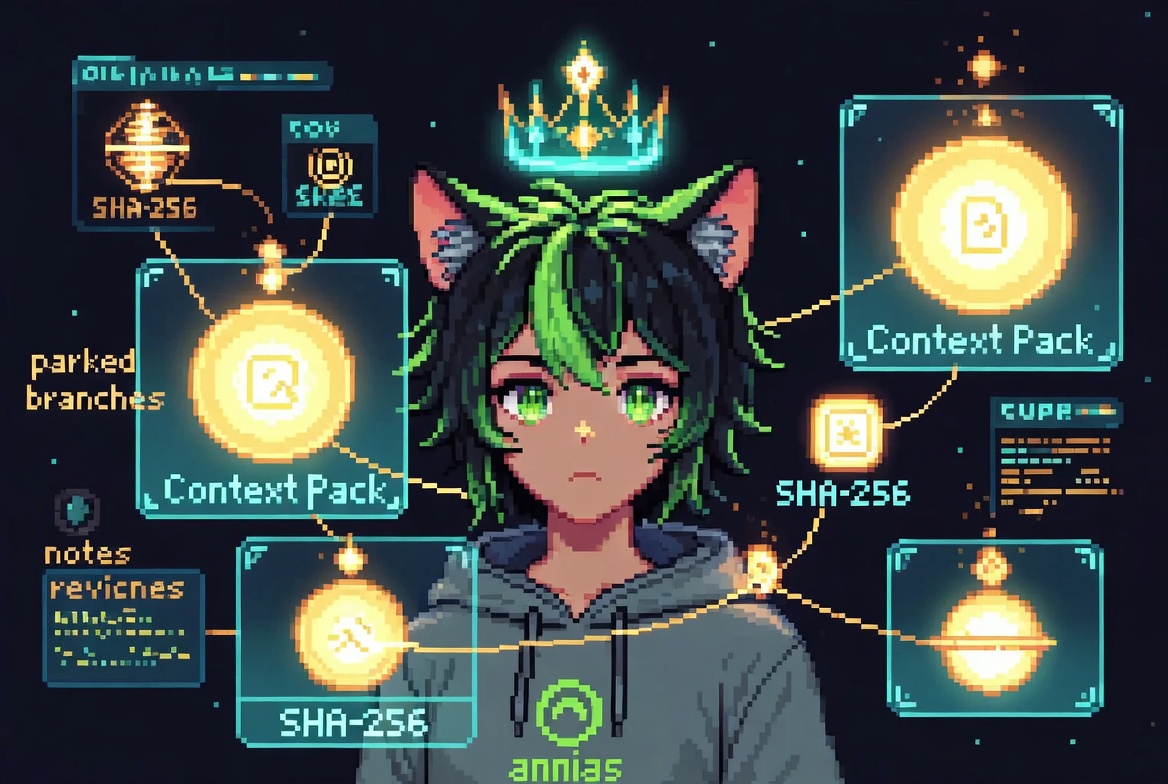
Memory and context preservation are first-class architectural concerns.
- Obsidian, Primary knowledge vault for linked thinking and references.
- Notion + MCP, Structured docs and collaboration surface.
- GitHub, Single-repo truth for code and coordination.
- Google Drive, Large-file drops and agent bus mirroring.
Context preservation patterns (Revision Cycler principles, Context Packs, parked branches) keep long-arc work alive across sessions and hosts without token bloat.
Infrastructure, Hosting & Edge Runtime
The layers that keep everything reachable and operational.
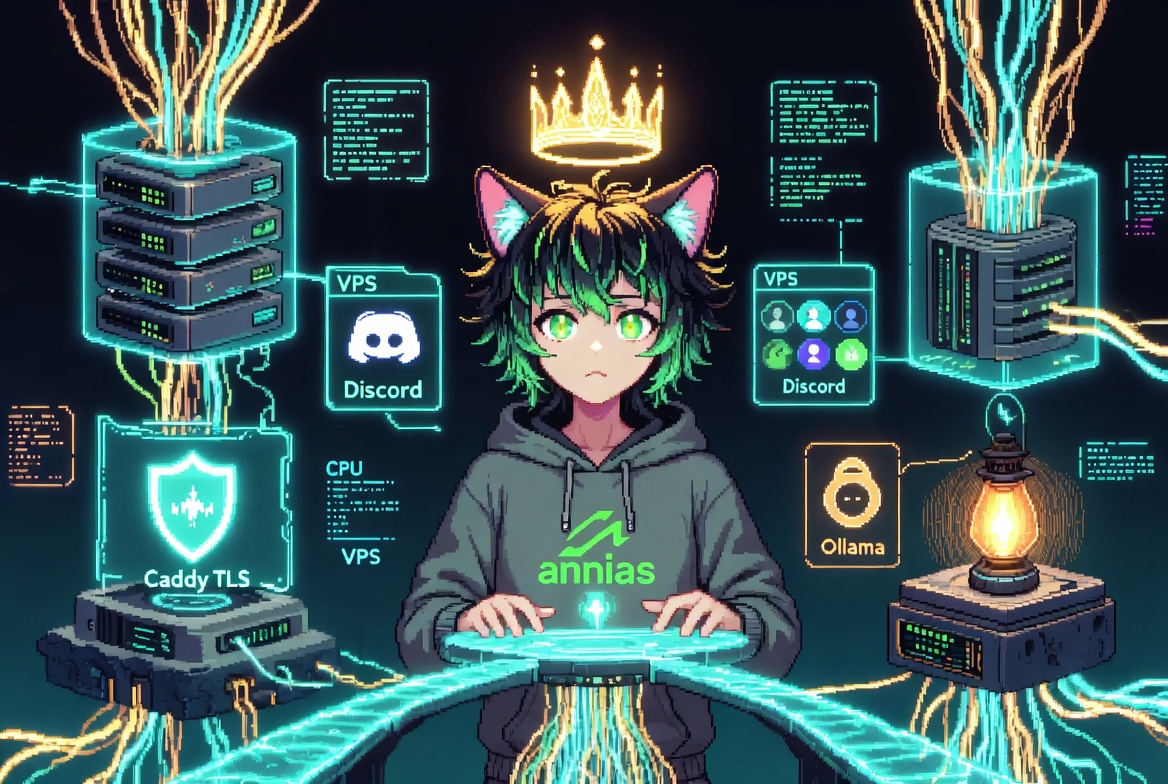
- Hostinger VPS + Caddy, Edge services, bots, lightweight inference-adjacent workloads.
- Ollama, Local/private model runtime for classification and non-crown tasks.
- Windows + WSL + Ubuntu/Debian, Main battlestation and hybrid workflows.
- Docker Desktop, Legacy container environment.
- Discord, Operational edge surface for community, bots, and agent coordination (not just chat).
Creative Production Stack (Media, Audio, Visual, 3D, Worldbuilding)
- FL Studio (primary DAW) + extensive custom mods for project continuity and asset intelligence.
- Suno, Used for ideation and prototyping within larger workflows.
- Vegas Pro, Resolume Arena, OBS Studio, Photomosh Pro, PolyPop Live, Video, live visuals, streaming.
- Blender, Meshy AI, Unity, Unreal Engine, VRChat, 3D, avatars, worldbuilding, interactive experiences.
- GIMP, Canva, Gamma, Miro, Figma, draw.io, Visual production and diagramming.
Supporting utilities: Audacity, VirtualDJ, VCV Rack, Sononym, Loopcloud, NVIDIA Broadcast, etc.
Legacy tools that still earn their place are kept lean and purpose-specific.
The Architecture Layer (What This Actually Is)
The public list above is only the visible surface. Underneath runs a Decentralized Self-Propagating Evolving Organism (DSEO) mindset: different layers responsible for different kinds of cognition and action, reasoning, execution, memory, orchestration, creative generation, synthesis. The system is modular by design so it can evolve as the landscape changes rather than being trapped inside one platform's assumptions.
A single chat thread can be helpful. A coordinated architecture can accumulate context, preserve intent, distribute tasks intelligently, and improve structurally over time. That is the layer I care most about, not novelty for its own sake, but leverage. Not just access to intelligence, but structure around it.
There will be more to share about the deeper architecture in future pieces. For now I am being deliberate about what to surface publicly, because I want to introduce these ideas in a way that is both responsible and useful.
Closing
What I've built is not just a collection of favorite tools. It is an evolving architecture for thinking, creating, building, and coordinating across many substrates.
The future of personal AI will not belong only to those with access to the best models. It will belong to those who know how to architect those models into coherent, evolving systems, environments that preserve continuity, distribute work, adapt over time, and turn fragmented capabilities into coherent outcomes.
If you are building your own stack, start by drawing the layers and the connections between them. The shape matters more than the parts.
There is much more coming. I'm being deliberate about how to bring it forward.
If you'd like the full unfiltered tech stack, to follow up on any of this, or to collaborate on what we build next, reach me at annias@earthside.tech. Join the Earthside Massive on Discord at discord.gg/ZWQKUFCBdw and find more work and art at linktr.ee/annias.